

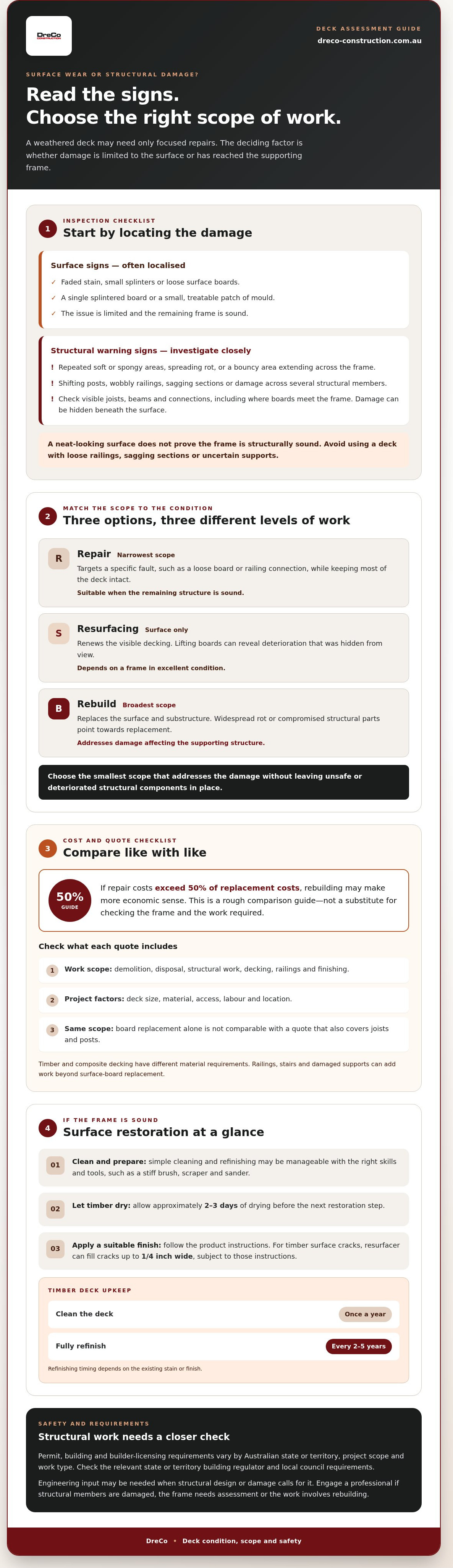
A worn-looking deck doesn’t always need to be rebuilt. For deck repair or replacement, the key distinction is whether damage is limited to surface boards or has reached the supporting frame: localised wear can often be repaired, while widespread rot or compromised structural parts point towards replacement. As a rough guide, rebuilding may make more economic sense when repair costs exceed 50% of replacement costs.
It’s understandable to hesitate before committing to a larger project, especially when visible damage doesn’t tell the whole story. This guide explains the signs that matter, compares deck repair or replacement, and outlines what restoration involves, so you can weigh your deck’s condition against the work required.
You’ll also learn how replacing surface boards differs from rebuilding the substructure, and what demolition and reconstruction typically involve. The aim is to give you a clear, practical basis for deciding whether your deck needs a focused repair or a more complete renewal.
Key Takeaways
- Compare the scope of repair, resurfacing and rebuilding, not just the visible damage, when weighing the likely cost.
- Look for soft spots, movement and damage to supports to help judge whether a problem is limited or more widespread.
- Deck material, labour and ongoing maintenance all affect whether repair or replacement makes more sense over time.
- Replacing surface boards can preserve a sound frame, while a full replacement renews the structure as well.
- Understand the main stages of demolition and rebuilding so you can plan for the work and disruption involved.
How much should it cost to rebuild a deck?
Repair, resurfacing and rebuilding cover different amounts of work, so compare the scope before comparing quotes. A useful guide is whether repairs approach 50% of replacement costs, alongside the deck’s condition and safety.
Repair, resurfacing and rebuild costs
Repair targets a specific fault, such as a loose board or railing connection, while keeping most of the deck intact. Resurfacing renews the visible decking but depends on a sound frame. Rebuilding replaces the structure as well as the surface, so it involves a broader scope. Whether repair or replacement is more economical depends on the deck’s condition and the scope of the work. The percentage is a comparison guide, not a substitute for inspecting the frame.
Factors affecting rebuild costs
Deck size, material, access, labour and location all affect rebuilding costs. Timber and composite decking have different material requirements, while lifting boards can reveal deterioration hidden from view. Railings, stairs and damaged supports also add work beyond surface-board replacement. The project price depends on its scope, materials, access and labour, and is provided after a quote request.
Ask for the scope to break out demolition, disposal, structural work, decking, railings and finishing. This makes it easier to compare like with like. For example, a quote for board replacement alone is not comparable with one that also covers joists and posts.
| Option | Work covered | Cost comparison | Key condition |
|---|---|---|---|
| Repair | Local fault or component | Usually the narrowest scope | Remaining structure is sound |
| Resurfacing | Deck surface | More work than a local repair | Frame is in excellent condition |
| Rebuild | Surface and substructure | Broadest scope | Damage affects structural parts |
Choose the smallest scope that addresses the damage without leaving unsafe or deteriorated structural components in place.
Permits, licensing and safety
In Australia, permit and building requirements depend on the state or territory and the project’s scope. Surface repairs and structural replacement may be treated differently, so identify the proposed work and check the relevant state or territory building regulator and local council requirements. Builder licensing rules also vary by jurisdiction and work type. Engineering input may be needed when structural design or damage calls for it.
Deck repairs can expose hidden rot, unstable supports and fall hazards, and incorrect work can weaken connections. Avoid using a deck with loose railings, sagging sections or uncertain supports. Hire a professional if structural members are damaged, the frame needs assessment or the work involves rebuilding.
Include railing work in the comparison rather than treating it as a cosmetic extra. Loose balusters, unstable posts and damaged connections affect both the scope and the deck’s safe use. A professional can assess the repair area, check its connection to the frame and estimate the cost based on the work required.
How do you restore an old weathered deck?
Start by distinguishing surface wear from damage to the supporting frame. This helps determine whether restoration is suitable. You can handle simple cleaning and refinishing yourself, but signs of structural movement need closer assessment.
Yes, straightforward surface work may be manageable if you have the right skills and tools, such as a stiff brush, scraper and sander. Clean and prepare the boards, let the timber dry, then apply a suitable finish according to its product instructions.
Localised versus widespread damage
Inspect the deck methodically, moving across each board and checking the joins, edges and visible supports. A single splintered board or small, treatable patch of mould is localised damage. Repeated soft areas, spreading rot or damage across several structural members indicate a more widespread problem.
Note where each problem appears and whether it changes how the deck feels underfoot. A soft spot in one board is different from a bouncy area extending across the frame, which may point to a deeper issue.
Surface damage and structural damage
Faded stain, small splinters and loose surface boards can often be addressed without replacing the whole deck. For timber with surface cracks, resurfacer can fill cracks up to 1/4 inch wide, subject to the product instructions.
Soft or spongy areas, shifting posts, wobbly railings and sagging sections need closer attention. Damage may be hidden beneath the surface: inspect visible joists, beams and connections, and look for rot where boards meet the frame. A neat-looking surface does not establish that the frame is structurally sound.
Structural damage and replacement
A small, localised patch of surface rot or mould may be treatable, but rot in a structural member calls for replacement of the affected timber. A deck ledger loosened by rot also needs replacement because it connects the deck to the house.
If rot is widespread through the substructure, or damaged connections and supports compromise the frame, resurfacing won’t fix the underlying problem. The extent of structural damage, not weathered appearance alone, determines whether full replacement is the safer option.
For a restoration, clean the boards first and let the wood dry completely before applying a finish. After preparation, allow approximately 2-3 days of drying before the next restoration step. Wood decks should be cleaned once a year and fully refinished every 2-5 years, depending on the existing stain or finish.
Keep the work to the surface layer if the frame remains sound. If your inspection reveals widespread rot or unstable supports, stop using the affected area and arrange a structural assessment. A deck with compromised supports needs a different response from one that only requires cleaning, sanding or refinishing.
If inspection points to rebuilding rather than surface restoration, a deck structure assessment can help establish the work involved.
When Should You Replace Your Deck?
Age matters, but material, upkeep and structural condition matter more. When weighing deck repair or replacement, compare the deck’s remaining useful life with the work needed to keep it serviceable.
Repair versus replacement considerations
Repair is often practical when damage is limited and the remaining structure is sound. Replacement becomes more relevant when rot, insect damage or failed connections affect structural parts. Labour also matters: repeated repairs can mean separate work over time, while full replacement addresses the deck as one project. Consider the frame, boards and fasteners together.
Outdated designs and materials
Older decks may reflect outdated design trends and building codes. That alone doesn’t mean they need replacing, but a rebuild can be an opportunity to reconsider layout, access and materials. Compare the existing design with how you use the outdoor area now. If the structure is sound and the layout still works for your household, keeping the deck may make sense.
Deck lifespan by material
Traditional wood decks have an average lifespan of about 10 to 15 years. Composite and PVC decking should last 25 years or more. These are general lifespan guides, not a substitute for assessing condition: maintenance, construction and exposure affect how a particular deck performs.
A wood deck close to 10 years old that has needed frequent repainting or restaining may be due for replacement. Give extra attention to structural integrity when assessing decks more than 15-20 years old. A well-maintained deck can last longer than a general lifespan estimate, so age alone doesn’t settle the decision.
Material also affects what can be repaired. Timber boards and substructure members affected by rot should be replaced, while some plastic decking materials require replacement rather than repair. Composite or PVC decking less than 10 or 15 years old is generally a repair candidate unless damage is extensive or has severely affected structural integrity.
For a clear decision, compare the damaged area with the condition of the rest of the deck. If posts, beams and joists remain sound, replacing boards or other affected components may preserve the existing frame. Widespread deterioration in structural components changes the scope. When weighing deck repair or replacement, consider whether sound structural parts can remain, not just how many boards look worn.
Demolition and rebuilding is estimated to take 8 to 15 days. To extend a wood deck’s life, clean it once a year and arrange full refinishing every 2-5 years, depending on its existing stain or finish.
Pay attention to fasteners during maintenance. Nails can lose their grip as wood expands and contracts, leaving boards loose. Check for movement and address loose connections. If the problem recurs across the deck, repairs may need to go beyond individual boards.
Choose repair when the structure is sound and damage is limited. Consider replacement when structural damage is widespread or repeated maintenance no longer makes sense for the deck’s condition and material.
Distinguishing deck board replacement from full deck replacement
Replacing boards renews the walking surface while keeping the existing frame. Full replacement removes and rebuilds the substructure, surface and railing, making the frame’s condition the key distinction.
Replacing boards while retaining the frame
Board replacement suits a deck with sound posts, beams and joists but split, loose or damaged surface boards. The existing frame stays in place, though minor repairs or reinforcement may be needed once the boards are lifted. Inspect the exposed timber before fitting new boards: a damaged joist takes the work beyond surface renewal.
Check whether damage is confined to isolated boards or appears across the surface. Several broken boards can still be replaced individually if the frame beneath them is sound. A screwdriver sinking more than 1/8 inch into suspect wood with little resistance is a warning sign that the affected timber needs closer assessment.
Full deck replacement
Full replacement involves removing the deck’s surface, railing and supporting substructure, then rebuilding those parts. It may be appropriate when rot, warping or other damage affects the frame, not just the boards. Resurfacing is suitable only when the existing frame is in excellent condition, with no rot, warping or damage.
Consider the whole structure: posts, beams, joists, stairs and connections. If several structural parts are compromised, new boards alone won’t fix the underlying problem. If posts, beams and joists are sound, you may be able to replace boards, railings and stairs without rebuilding the entire deck.
Composite boards and timber frames
Composite boards can be installed over a timber frame when the existing structure is suitable. First inspect the frame for rot, warping and damage, then check that its condition and layout meet the composite boards’ installation requirements. Changing the surface material doesn’t make an unsound frame suitable for reuse.
Plan the transition as a complete surface system rather than assuming composite boards will suit every existing deck. Board dimensions, fastening method and frame condition all affect the work. If the timber framing is compromised, keeping it beneath new composite boards leaves the central structural issue unresolved.
Repairs to boards, railings and stairs
Localised repairs can involve more than boards. A broken baluster, loose railing connection or bouncy stair section may need its own repair while the rest of the deck remains in place. Check each part for movement and damage, then assess the supporting frame before deciding how far the work should extend.
Apply the same distinction to every component: replace damaged boards, railing parts or stairs when the surrounding structure remains sound. If repairs reveal rot in joists, posts or beams, reassess the scope. The practical choice depends on whether sound structural parts can remain, not simply how many boards look worn.
Deck replacement process
Plan the rebuild as a sequence, from defining the scope to checking the finished deck. Demolition and rebuilding is estimated to take 8 to 15 days, with the actual work shaped by the deck’s size, materials, access and condition.
- Set the scope. Record which parts need replacing, including the surface, joists, posts, railing and stairs. For example, a deck with damaged joists needs more structural work than one with boards alone. Confirm the intended layout and material before removal begins, so the build can follow a clear plan.
- Prepare the outdoor area. Clear furniture, pots and other items from the deck and the surrounding work space. Set aside a practical route for carrying materials and removing demolition waste. Move breakable items away from the work area, and keep household access clear where possible.
- Remove the old deck. Take apart the surface and structural components in a controlled sequence. Separate material for disposal as work proceeds, rather than leaving debris scattered around the yard. Once the old boards and frame are removed, the ground and remaining connections can be assessed before construction continues.
- Inspect and prepare the base. Check the exposed footings and support points, then examine any framing that will remain. Replace damaged structural components rather than covering them with new decking. The condition of the footings, posts and joists guides the next steps and helps establish where the new frame can be secured.
- Build and finish. Install the new frame, then fit the decking boards, stairs and railing in sequence. Keep board spacing and fastenings consistent with the selected material’s installation requirements. Finish by checking that boards sit securely, stairs feel stable and railing connections are firm.
Material choice affects both construction and upkeep. Timber and composite decking have different installation requirements, so settle on the material before work starts. Include stairs and railings in the agreed scope; adding them later can change the work sequence and prolong on-site work.
Weather can affect outdoor construction, too. Rain may interrupt work or delay tasks that rely on dry surfaces. Keep the site clear, and don’t return furniture until the build is complete and the work area is ready to use.
A well-defined scope is the practical takeaway: identify what is being removed, what structural parts need rebuilding, and which finishes are included. If you’re ready to plan a rebuild, discuss your deck construction project.
DreCo: Decking & Deck Construction
DreCo can help turn your deck assessment into a practical plan for repair or rebuilding. Its decking work includes timber decking and re-decking, as well as composite decking. The deck’s condition and your material choice help shape the scope.
If the frame is sound but the boards need renewing, re-decking may suit the project. If structural damage calls for a more extensive rebuild, DreCo’s deck construction service can address the broader scope. DreCo also offers fencing, gates and privacy screens as part of outdoor projects.
Bring your observations about loose boards, movement or visible deterioration to a discussion about the work. You don’t need every detail settled before taking the next step. Contact DreCo or visit dreco-construction.com.au to discuss your deck project.
Make a clear plan for your deck
Turn what you’ve noticed into a practical project brief. Consider how you use the space, what you want the finished deck to do and which parts of the existing structure need assessment. This gives the conversation a useful starting point, even if you’re still weighing deck repair or replacement.
DreCo offers deck construction, composite decking, and timber decking and re-decking. These services can shape a project around the deck’s condition and the finish you have in mind, rather than starting with a fixed design.
Bring your questions about materials, layout or the work involved, even if you haven’t settled every detail. A straightforward discussion can help define the next steps for your outdoor space.
Contact DreCo about your deck and take the next step when you’re ready.
Frequently Asked Questions
Can Old Decking Be Restored?
Yes, old decking can be restored when the timber remains sound and the wear is mainly cosmetic. Before treating the whole surface, clean a small area and see how the existing finish responds. Let the deck dry fully after cleaning or rain, then follow the new finish’s preparation and application instructions. If the timber is damaged rather than merely weathered, a coating won’t restore its strength.
Can You Keep the Frame and Replace the Boards?
Yes, provided the frame is sound and suitable for the replacement boards. Before removing the old surface, note the board direction and how the edges meet stairs, walls and adjoining paths. Once the boards are lifted, inspect the exposed framing and connections rather than relying only on what was visible from above. This can reveal damage that affects how securely new boards can be fixed.
Is composite always the cheapest replacement option?
No. Composite decking isn’t always the least expensive option, because project cost also depends on deck size, frame condition, access, labour and materials. Compare the full scope, including whether the existing structure can remain and what preparation the chosen boards need. Composite resists fading, staining, mould and insect damage, but that doesn’t make it the cheapest choice for every project.
Is it worth repairing a deck?
Repair can be worthwhile when the damage is localised and the rest of the structure remains serviceable. Compare the repair scope with the cost of replacing the deck: replacement may be more economical when repairs exceed 50% of replacement costs. For example, a repair quote should identify whether it covers only a damaged area or also addresses connected parts. That distinction helps make the comparison meaningful.
Replacing vs Restoring Wooden Decks | What Should You Do?
Choose restoration for a wooden deck with a sound surface that mainly needs cleaning or a fresh finish. Replacement is more appropriate when the wood itself is damaged or the proposed coating can’t address the underlying problem. Before choosing a resurfacer or coating, check the manufacturer’s directions, including permitted crack size and preparation requirements. A product’s ability to cover a flaw doesn’t show whether the timber beneath is sound.
Will new boards fix a bouncy deck?
Not necessarily. Bouncy boards may mean the fixings are loose, but movement through the deck can also come from joists or other framing. New boards won’t fix a problem in the supporting structure. Notice whether the movement is limited to one board or extends across a larger area, and have the frame assessed before deciding on surface work. This helps avoid covering a structural fault with new material.
What are the common signs of deck rot, structural damage or unsafe boards?
Look for timber that feels soft, boards that move underfoot, sagging sections, shifting posts and wobbly railings. Check fasteners, too: nails can lose their grip as wood expands and contracts, leaving boards loose. Inspect where boards meet supports and where posts connect to the deck. A localised surface flaw differs from movement or deterioration affecting several connected parts.
How much does deck repair cost in Australia?
The price depends on the work required, the deck’s size and condition, materials, access and labour. Replacing a single board is a different scope from repairing stairs, railings or structural framing. DreCo provides a price after a quote request, based on the project. A clear scope helps show which components and preparation are included in the proposed work.


