

The board that looks like timber doesn’t have to be timber. Composite decking for homes combines wood fibres and recycled plastics, with the materials described here typically making up 40-60% each. The result is a decking option with a timber-like appearance and different care and specification needs.
It’s understandable to compare composite decking for homes with timber on appearance alone, but practical details matter too. Board finish, colour, installation requirements and exposure to sun, water or regular foot traffic all help determine which option suits your space.
This guide explains how composite decking is made, how its specifications compare with timber, and what to consider for a home deck, pool area or busy walkway. You’ll also learn how board colours, finishes and sizes affect the choice, so you can weigh the options against your project needs.
Key Takeaways
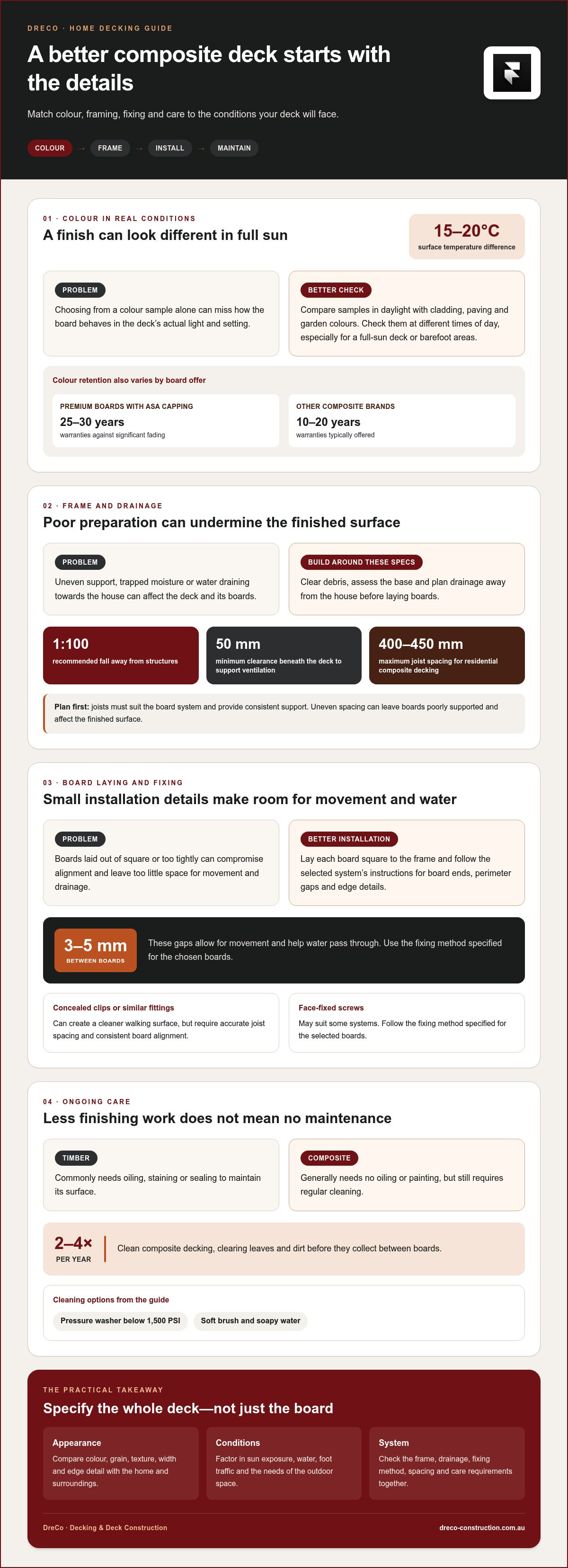
- Compare board colours and finishes in the light and conditions where the deck will be used; light and dark boards can differ in surface temperature by 15-20°C on a hot day.
- Check how the board system is installed, including its fixing method and the spacing needed to allow for movement and drainage.
- Weigh composite against timber by looking beyond the initial material choice to upkeep, appearance and the demands of your outdoor space.
- Review the board’s material mix and recycled content to understand what contributes to its look and performance.
- For pool surrounds, bushfire zones and busy areas, match the board’s relevant properties to the conditions it will face.
Board colours, finishes, sizes and custom lengths
Colour, surface texture and board dimensions shape how a deck looks and feels. A pale timber-look finish, for example, creates a different effect from a dark board with pronounced grain.
Timber-look finishes and colour options
Timber-look decking boards echo familiar timber tones, from light, natural-looking shades to deeper browns and greys. Subtle grain can suit a clean-lined exterior, while a more pronounced pattern may complement weatherboard or brick homes. Compare samples with nearby cladding, paving and garden colours before choosing a finish.
Surface finish affects the look of the boards, even when the colour is similar. Examine the grain and texture in daylight, then compare them with materials already around the deck. Warm brown may sit comfortably with red brick, for instance, while cooler grey can work with pale stone.
Board profiles and dimensions vary between products, so compare the visible width and edge detail as well as the colour. Wider boards can create a more open visual rhythm, while narrower boards produce more repeated lines. The chosen profile also affects how borders, steps and deck edges can be finished.
Selecting a board colour
Start with the fixed colours around the deck, including the home’s exterior, window frames and nearby paving. Then consider the deck’s size and position: a light colour can make a compact area feel more open, while a darker tone can define a larger outdoor zone. Check the colour at different times of day.
Sun exposure matters in Australian conditions. Light and dark composite decking boards can differ in surface temperature by 15-20°C on a hot day. If the deck sits in full sun, factor that difference into the colour decision, especially for areas where people walk barefoot or children play.
Colour retention also deserves attention. Premium boards with ASA capping list 25-30 year warranties against significant fading; other composite decking brands typically offer 10-20 years. Compare the warranty terms with the board finish, and consider how much direct sun the deck receives.
Plan board lengths around the deck shape before installation. Measure each run, mark steps and corners, then map where joins will fall. This helps avoid awkward short pieces and keeps repeated lines tidy. Since available lengths depend on the product system, plan around the lengths offered for your chosen boards.
What is Composite Decking?
Composite decking uses manufactured boards rather than solid timber, creating a different surface and installation system. For composite decking for homes, the boards matter, but so do the supporting frame and fixing method.
Australian building rules, permits and safety requirements depend on the deck’s location, design and connection to the home. Check council approval requirements and account for structural support, drainage, access and any bushfire exposure before work begins.
A composite deck’s cost depends on the project scope. Size, access, board choice, subframe condition and edge detailing all matter. A new build on a clear site differs from replacing a timber deck with an uneven or damaged frame.
Prepare the base before laying boards. Clear debris, assess the ground or concrete, and plan how water will drain away from the house. The recommended fall is 1:100 away from structures, while at least 50mm of clearance beneath the deck supports ventilation.
Joists need to suit the board system and provide consistent support. Residential composite decking joists should be spaced no more than 400mm to 450mm centres. Set out the frame carefully, since uneven spacing can leave boards poorly supported and affect the finished surface.
During installation, lay each board square to the frame and keep the recommended 3-5mm gaps between boards. These spaces allow for movement and help water pass through. Follow the selected system’s instructions for board ends, perimeter gaps and the final edge detail.
Concealed fixing systems use clips or similar fittings between boards instead of visible screws across the walking surface. They can create a cleaner finish, but require accurate joist spacing and consistent board alignment. Face-fixed screws may suit some systems, so use the fixing method specified for the chosen boards.
Installing over an existing deck is appropriate only if the underlying structure can support the new boards and frame. Inspect for movement, rot, trapped moisture and poor drainage, then repair or replace unsuitable sections before installation.
Compared with a timber deck, composite boards generally need no oiling or painting. A well-planned deck installation starts with the frame and drainage, not the first board.
Decking specifications and comparison with timber
Composite and timber differ in upkeep, surface behaviour and long-term planning. Compare board specifications with your outdoor space, local climate and willingness to maintain the deck.
Maintenance compared with timber
Timber decking commonly needs oiling, staining or sealing to maintain its surface. Composite avoids routine oiling and painting, but still needs regular cleaning. Plan to clean composite decking 2-4 times per year, clearing leaves and dirt before they collect between boards.
For cleaning, use a pressure washer below 1,500 PSI, or choose a soft brush and soapy water. Timber care may also involve preparing the surface before applying a new finish. Compare the upkeep involved over time, not just the work required immediately after installation.
Cost comparison with timber
The initial cost comparison depends on board type, deck dimensions, access and any framing work. Composite and timber also differ in ongoing care: oiling, staining and sealing timber add recurring tasks, while composite generally avoids those treatments.
For a like-for-like comparison, list the boards, subframe work, fixings, edge details and future upkeep. Replacing boards on a sound frame, for example, is a different scope from rebuilding a deck with damaged framing. Compare the full project scope, not just the board material.
Specifications and timber comparison
Composite boards have product-specific requirements for support, spacing and fixings. Residential joists should be spaced no more than 400mm to 450mm centres, and installation gaps should be 3-5mm. Timber also needs a suitable supporting structure, but board systems and installation instructions differ.
Compare board thickness, profile, surface texture and fixing method before choosing. Concealed fixings can give composite boards a neat surface, while visible fixings may suit some timber finishes. Match each specification to the deck’s shape and intended use; steps, borders and narrow edges can affect the finish.
Lifespan and warranty
A board’s service life depends on installation, exposure and care; a warranty period is not a lifespan promise. Premium composite boards with ASA capping list 25-30 year warranties against significant fading. Other composite decking brands typically offer warranties of 10-20 years.
Read the warranty terms alongside the board specifications, especially what any fading coverage addresses. A shaded deck and one exposed to strong sun face different conditions. Also consider installation and maintenance details: the frame, drainage and regular cleaning affect how the deck performs over time.
Composite decking materials and recycled content
Composite boards combine wood fibres and plastics, but material proportions and product details vary. Understanding the material mix helps you compare durability, maintenance and environmental considerations for outdoor living.
Materials and manufacturing
Composite decking described here contains 40-60% wood fibres, which contribute to its appearance and structural integrity. Recycled plastics make up 40-60%, adding durability, moisture resistance and longevity. These materials are combined into boards, rather than installed as separate layers of timber decking and plastic.
Material proportions vary between formulations, so don’t assume every board has the same composition. Compare the manufacturer’s material information with the board’s intended use. A deck exposed to regular rain, for example, may call for different considerations from a sheltered outdoor space.
The visible finish doesn’t tell the whole story. Check whether a board is capped, what its core contains and which care instructions apply. A capped surface and a particular material mix are separate product details, so review both before choosing boards for your home.
Recycled and reclaimed content
Recycled plastic content can give material a second use in a decking product. The stated range is 40-60% recycled plastics, alongside 40-60% wood fibres. Reclaimed wood fibres and recycled plastic are distinct inputs, so look for a breakdown rather than treating “recycled content” as one single material.
When comparing boards, note the stated material proportions and what each figure refers to. A product may use recycled plastics without reclaimed wood, or include wood fibres from different sources. The material description gives you a clearer basis for comparison than a broad label alone.
Use the product’s care instructions as another comparison point. Composite boards generally don’t need sealing like timber decking, but cleaning and upkeep steps depend on the product. This distinction helps you weigh practical ownership as well as materials.
Recycled materials and sustainability
Recycled inputs can reduce reliance on newly sourced raw materials, but recycled content alone doesn’t describe a product’s full environmental impact. Consider material proportions, intended use, maintenance needs and how the board may be handled at the end of its service life.
For a useful comparison, gather product information and check three things: stated recycled content, care requirements, and details about reuse or disposal. These points help you compare decking without assuming one recycled-content figure tells the whole story.
A board that avoids routine sealing may reduce the need for those maintenance products, while still requiring cleaning. Weigh that practical benefit against the product’s material details and care requirements. A considered choice supports outdoor living while keeping sustainability claims tied to specific product information.
Choosing decking for pools, bushfire zones and high-traffic areas
Pool surrounds, exposed sites and busy paths place different demands on composite decking for homes. Match the board’s documented properties and care instructions to the conditions around your property.
Decking around pools and high-traffic areas
For a pool area, review the board’s surface finish, cleaning instructions and suitability for regular water exposure. Water can be tracked onto nearby decking, so consider how the surface will be used and maintained. Composite construction alone doesn’t mean a board suits every poolside setting.
For a busy route, such as the path between a back door and garden, consider foot traffic, dirt and furniture movement. Compare board texture and finish, then plan how you’ll access and clean the space. These practical checks help you choose for actual use, not appearance alone.
Australian weather also affects how an outdoor surface performs. A deck in full sun faces different exposure from one beneath a covered pergola, while rain and shade affect how quickly the area dries. Note the site’s sun, shelter and water exposure before comparing boards.
Colour is another practical consideration for exposed spaces. Light and dark boards can differ in surface temperature by 15-20°C on a hot day. A pale finish may be worth considering for a sunny area, while the surrounding house and paving can guide the final colour choice.
Composite boards contain plastic as well as wood fibres, but that doesn’t make every product equally resistant to weather, fading or wear. Compare each board’s specifications and maintenance guidance. For a busy path, check how to clean the selected surface and whether furniture or planter placement needs planning.
Bushfire resistance and ratings
In bushfire-prone areas, look for a product-specific bushfire rating rather than assuming composite decking is automatically resistant. Some competing composite decking brands achieve BAL-12.5 or BAL-19 ratings. Some premium capped composite decking products have BAL-29 fire-rated options.
Ratings apply to specific products or options, not composite boards as a whole. Match the rating for your selected board to the project requirements, and consider the deck’s location and surrounding materials. Assess timber against the site’s needs too, rather than comparing materials by appearance alone.
Before settling on boards for a pool, bushfire zone or busy outdoor area, list the site conditions and compare them with the product specifications. If you’re planning a new deck or replacing an existing one, discuss decking construction for your site and its intended use with DreCo.
DreCo: Decking & Deck Construction
DreCo can help turn your material choice into a planned deck, whether you’re considering composite boards, timber decking or re-decking an existing area. It’s a practical next step when you’ve weighed colour, upkeep and site conditions and want the layout and construction scope brought together.
Deck construction can also be planned alongside related outdoor carpentry, such as fencing, gates and privacy screens. A new deck, for example, may need to meet an existing boundary neatly or create a defined transition to the garden.
Whether you’re still comparing options or already have a plan, contact DreCo to discuss your decking project.
Plan a deck that fits your home
Turn your preferences into a practical brief. Note how the space connects to the house, where people will walk and what you want the finished area to make easier. A clear picture of daily use helps shape decisions about layout, access and the transition to your garden.
Choosing composite decking for homes is one part of the project; the supporting design and finish need to work together. DreCo offers Decking & Deck Construction, Composite Decking, and Timber Decking & Re Decking, so you can discuss the material and construction approach as one residential project.
You don’t need every detail settled before starting a conversation. Bring your ideas, photos or an early sketch, and talk through what may suit the space. Contact DreCo about decking to take the next step towards a carefully planned outdoor area.
Frequently Asked Questions
What is composite decking and how does it work?
Composite decking is made by combining wood fibres and plastic into boards for outdoor surfaces. The boards sit on a supporting frame and are fixed using a system suited to their profile. A concealed clip, for example, can connect neighbouring boards without visible screws across the surface. The board material, supporting structure and fixing method work together, so installation must follow the selected product’s requirements.
How much does composite decking cost per square metre in Australia?
There isn’t one per-square-metre figure that applies to every Australian deck. Cost depends on the project scope, including the deck’s dimensions, board type, site access, frame condition, steps, borders and removal of existing materials. A straightforward rectangular platform has a different scope from a raised deck with complex edges, so compare the complete project.
How does composite decking compare with timber decking in Australia?
Composite decking generally needs less ongoing surface treatment, while timber offers a natural material that can be sanded and refinished. For a home in postcodes 3186 to 3193, consider the deck’s exposure, desired appearance and upkeep routine. Timber can suit someone who values a natural grain and accepts periodic finishing; composite can suit a household seeking a different maintenance routine. Compare the full installation, not only the boards.
Does composite decking fade, scratch, stain or get hot in the sun?
It can fade, scratch or stain, and its surface can become hot in direct sun. Light and dark boards can differ in surface temperature by 15-20°C on a hot day. Move pots and outdoor furniture carefully to reduce scuffing, and clean spills before they sit on the surface. Product finish and exposure affect how changes appear, so review care instructions for the specific board.
What maintenance and cleaning does composite decking need?
Clean composite decking regularly to remove leaves, dirt and spills before they build up. A soft brush, water and mild soapy solution can handle routine marks; rinse away residue afterwards. Clear debris from between the boards and avoid harsh tools that could damage the finish. Follow the board maker’s cleaning guidance, especially for stubborn stains, so the method suits the surface.
Is composite decking suitable for coastal areas and bushfire-prone locations in Australia?
Suitability depends on the board’s specifications and the site conditions. Coastal homeowners should consider salt, wind-driven rain, drainage and the cleaning needed to clear deposited debris. For bushfire-prone locations, some products have BAL-12.5 or BAL-19 ratings, and some premium capped options are rated BAL-29. These ratings apply to particular products, so match the specific board to project requirements.
What are the environmental impacts and recyclability of composite decking?
Composite decking uses wood fibres and recycled plastics, but recycled content alone doesn’t show its full environmental impact. Check what materials the product uses, how long it is intended to serve and what care it needs. Don’t assume an installed board can go into household kerbside recycling. End-of-life options depend on the material mix and local processing, so consider disposal alongside the initial material choice.
What Australian building rules, permits and safety requirements apply to a home deck?
Requirements depend on the deck’s location, design and connection to the home. Check council approval requirements and account for structural support, drainage, access and bushfire exposure before work begins.


