
The lowest deck quote can be the hardest to compare. One proposal might include removing old boards, preparing the site and finishing details, while another leaves those items unclear. Knowing how to choose a deck builder means looking beyond the total to the work, communication and decisions behind it.
It’s reasonable to want confidence in the workmanship and a clear idea of what to expect at home while the work is under way. The finished deck also needs to suit your home, site and intended use, whether you’re considering timber, composite decking or re-decking.
This guide gives you a practical checklist for comparing proposals, understanding what a well-defined scope covers and identifying material, site and approval details to consider before work begins. DreCo is a Melbourne residential carpentry business led by a qualified carpenter. Its residential service area includes postcodes 3186, 3187, 3188, 3189, 3190, 3191, 3192 and 3193. Deck projects are planned around the home and how you want to use the space. Use the checklist to set expectations and assess whether a project is the right fit before building starts.
Key Takeaways
- Start with how you’ll use the deck, then note household needs, access and privacy to shape a useful project brief.
- When considering how to choose a deck builder, look for residential deck experience and workmanship details relevant to your home.
- Compare proposals by checking what each includes for materials, preparation, structure, finishes and access, not just the total.
- Use a pre-start checklist to organise site details, design decisions, applicable approvals and timing before work begins.
- Explore how DreCo’s custom timber decking, composite decking and re-decking can suit different homes and outdoor spaces.
How to choose a deck builder: start with your home and project
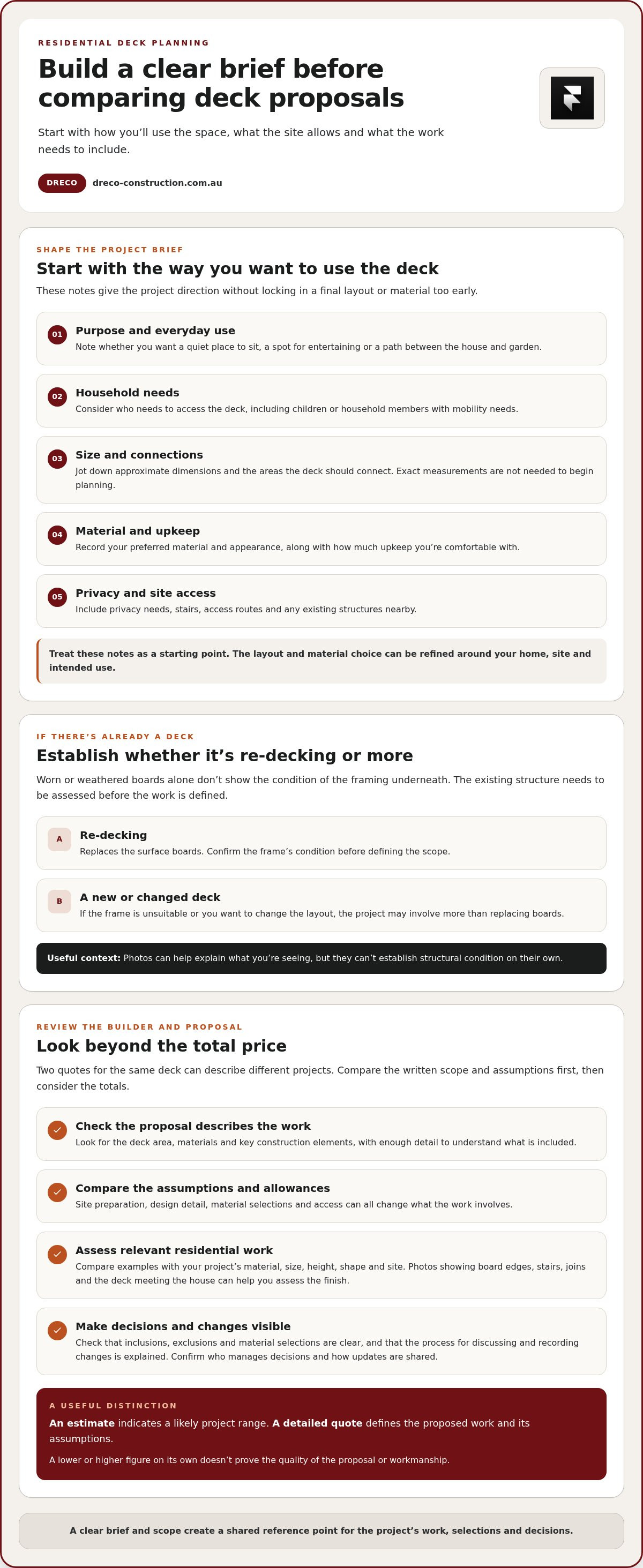
You don’t need a finished design before planning a deck. Start with a brief describing what you want the space to do, what the site is like and which details you’re still deciding. This gives the project direction without locking you into a particular layout or material too early.
A project brief is a shared outline of how you want to use the deck, what the site allows and what the work needs to include. It helps shape the scope and gives the quote a clear basis. The deck’s connection to the house, its height and shape, and access to the site can all affect how the work is planned. For a high-level introduction to deck construction, including common forms and materials, see Wikipedia’s overview.
What should you decide before contacting a deck builder?
Start with everyday use, not exact measurements. Will the deck be a quiet place to sit, a spot for entertaining or a path between the house and garden? Note who needs to access it, including children or household members with mobility needs. Then jot down:
- Approximate dimensions and the areas the deck should connect.
- Preferred material and appearance, plus how much upkeep you’re comfortable with.
- Privacy, stairs, access routes and any existing structures nearby.
These notes are a starting point, not final specifications. The layout and material choice can be refined around your home, site and intended use.
When does a project need a new deck rather than re-decking?
Re-decking replaces the surface boards, but worn or weathered boards alone don’t reveal the condition of the framing underneath. The existing structure needs to be assessed before the work is defined. If the frame is unsuitable or you want to change the layout, the project may involve more than replacing boards. Photos can help explain what you’re seeing, but they can’t establish structural condition on their own.
DreCo undertakes custom timber decking, composite decking and re-decking for Melbourne homes. For an existing deck, the project starts with understanding the current structure and how you want the finished space to function. That distinction helps define whether the work is a surface renewal or a new deck shaped around your home, before materials and construction details are settled.
How to assess a deck builder’s experience, workmanship and communication
A long list of carpentry services doesn’t show how closely a builder’s experience matches your deck. Look for residential work with comparable materials, scale and site conditions. A deck on a sloping block, for example, involves different layout and access considerations from a low platform beside a level garden.
Photos can help you assess the finish, especially when they show more than the overall shape of a completed deck. Look for board edges, stairs, joins and the way the deck meets the house. DreCo is a Melbourne residential carpentry business led by a qualified carpenter, and its work includes custom timber and composite decks and re-decking.
How do you judge whether a builder’s past work is relevant?
Compare examples with your project: material, size, height, shape and surrounding site. Close-up views can show how neatly edges and transitions are finished, while wider shots show how the deck sits with the home. Testimonials can add context about a client’s experience, but they don’t replace a clearly described scope of work.
What should good project communication look like?
Before work starts, the agreed scope should make inclusions, exclusions and material selections easy to understand. It should also explain how changes will be discussed and recorded, who is managing decisions, and how updates will be shared. This keeps choices visible instead of leaving details open to interpretation as work progresses.
Clear communication turns the agreed scope into manageable project decisions. It gives you a shared reference point when a selection needs to be settled or a change is proposed, and helps everyone understand what has been agreed.
Qualifications, insurance and regulatory requirements should be described accurately and checked where they apply to the project. DreCo’s website states that it has public liability insurance. For guidance on checking a building team’s credentials and references in Victoria, consult the Victorian government’s guide to choosing a builder.
These checks offer a practical way to think about how to choose a deck builder: consider relevant residential work, visible finish details and a process that keeps the scope and decisions clear. To see how DreCo approaches residential decking projects, explore its timber, composite and re-decking work.
How to compare deck builder quotes without choosing on price alone
Two quotes for the same deck can describe different projects. Compare the written scope and assumptions first, then consider the totals. Site preparation, design detail, material selections and access can all change what the work involves. A lower or higher figure, on its own, doesn’t prove the quality of the proposal or workmanship.
An estimate indicates a likely project range; a detailed quote defines the proposed work and its assumptions. Before treating quotes as like-for-like, check that each describes the deck area, materials and key construction elements clearly enough for you to understand what’s included.
What should a deck quote clearly describe?
Use a simple comparison to spot gaps and differences. If an item is unclear, note it for clarification before deciding how the proposals compare.
| Scope item | What to compare |
|---|---|
| Materials | Timber or composite decking, and any stated material selections. |
| Preparation | Removal of existing boards, site preparation and other work described. |
| Structure | The proposed framing and other relevant construction elements. |
| Finishes | Included finishing work and details at edges, stairs or joins. |
| Access | Assumptions about reaching the work area and moving materials. |
| Exclusions | Work or items specifically stated as outside the quote. |
Record selections and changes in writing, including how they affect the scope. This helps distinguish an agreed change from an assumption and keeps the project record clear.
Why can two deck quotes differ?
One proposal may allow for more preparation, a different decking material or additional design details. Another may assume easier site access or describe fewer finishing elements. For re-decking, the treatment of the existing structure may also differ. Read the assumptions alongside the inclusions rather than comparing totals in isolation.
Credentials are a separate part of assessing a proposal. Where registration requirements apply to the work, the Victorian Building Authority provides a tool to check a builder’s registration. Reviewing the written scope alongside relevant credentials gives you a more considered basis for how to choose a deck builder and a clearer understanding of what each proposal sets out to deliver.
Which Melbourne site, timing and approval details should you check?
A deck is shaped by more than its footprint. Sloping ground, drainage, nearby structures and the way the deck meets the house can all affect the design and work involved. In Melbourne, note how the area is exposed to sun, rain and wind, as well as the upkeep you’re comfortable with. These observations can help inform a timber or composite choice, but neither material is right for every site.
How can site conditions affect a Melbourne deck project?
Before planning starts, walk through the area and record anything that could affect construction or everyday use. Where does water collect after rain? Is the site sloped, and are fences, paths or existing structures close to the proposed deck? Consider how materials and tools could reach the work area, and how household routines or neighbouring spaces might be affected. These details help ground the design and work plan in the conditions of your property.
Do you need council approval for a deck in Victoria?
Approval requirements depend on the project and property. Deck height and location, property constraints and local council rules may all be relevant, so don’t rely on a general rule of thumb. Your local council is a sensible starting point for current guidance. A discussion about the proposed scope can help with project planning, but it doesn’t replace formal advice about which approvals apply.
Use this pre-start checklist to organise the details before work begins:
- Site constraints: Note slope, drainage, existing structures and how the deck will connect to the house.
- Design scope: Record the intended layout, approximate dimensions, materials and features that still need decisions.
- Applicable approvals: Check current Victorian and local council guidance for your property and proposed work.
- Access: Identify entry routes, narrow passages, gates and areas that need to remain clear.
- Timing: Discuss the proposed work sequence and note household routines or neighbouring areas that need consideration.
A clear record of these points keeps site conditions, design choices and expectations in view as the project takes shape. It also gives you a more useful basis for how to choose a deck builder, because the discussion can address your home rather than a generic deck plan.
If you’re planning a residential deck in Melbourne, discuss your decking project with DreCo.
Choosing DreCo for residential decking in Melbourne
DreCo is a Melbourne residential carpentry business focused on projects for homes. Choosing a builder is easier when the work suits your property and how you want to use the space. DreCo builds custom timber and composite decks and carries out re-decking. These options offer different ways to shape an outdoor area, whether you’re planning a new deck or updating an existing one. DreCo’s local service area includes postcodes 3186, 3187, 3188, 3189, 3190, 3191, 3192 and 3193.
A useful project conversation can start with what you already know: how the deck should connect to the house, who’ll use it, the look you prefer and any site constraints you’ve noticed. You don’t need to arrive with every dimension or finish decided. Those priorities help guide the discussion and bring the practical choices into focus.
What deck projects does DreCo build?
Custom timber decking creates a new outdoor surface in timber, planned around the home’s layout and intended use. Composite decking offers another material to consider alongside the appearance and upkeep you want. Re-decking renews the boards on an existing deck, with the work shaped by the project and the condition of the existing structure.
The right direction depends on how the space meets the house, how you plan to use it and the finish you have in mind. DreCo can shape the project around those details and the character of your home, rather than starting with a fixed specification. This makes the planning conversation useful whether your priorities are entertaining, everyday outdoor living or a neater connection to the garden.
What is a useful next step if you are still planning?
Bring a short list of goals, preferred materials and known site constraints. You might note where people will enter the deck, how much privacy matters or whether an existing deck is part of the project. Early ideas are enough to begin discussing the work; you don’t need to settle every design decision first.
DreCo is led by a qualified carpenter, and its website states that the business has public liability insurance. These details sit alongside the practical fit of the project: a clear discussion about your home, intended use and desired finish. For homeowners considering how to choose a deck builder, that first conversation can help establish whether the proposed work suits their needs and property.
If you’re ready to talk through a new deck or re-decking project, discuss your deck project with DreCo. You can bring a developed plan or simply share what you’d like the outdoor space to do.
Take the next step towards a deck that fits your home
Knowing how to choose a deck builder starts with a clear picture of how you’ll use the space. Compare written scopes, workmanship and communication, then consider site conditions and applicable approvals before work begins. These checks help you understand what each proposal includes and whether it suits your home.
DreCo is a Melbourne residential carpentry business led by a qualified carpenter, offering timber decking, composite decking and re-decking. DreCo’s website states that the business has public liability insurance. Whether you have a finished plan or are still shaping your ideas, a practical conversation can help clarify your project’s direction.
Discuss your deck project with DreCo and take the next step at a pace that feels right for you.
Frequently Asked Questions
How do I choose a reliable deck builder?
To work out how to choose a deck builder, compare relevant residential projects, visible finish details, written scope and communication. Look for examples involving similar materials or site conditions, and check that inclusions and exclusions are clear. Verify relevant credentials where applicable. DreCo is a Melbourne residential carpentry business led by a qualified carpenter, and its website states that it has public liability insurance. Its local service area includes postcodes 3186, 3187, 3188, 3189, 3190, 3191, 3192 and 3193.
What questions should I ask a deck builder before hiring them?
A useful project discussion should clarify what the written scope includes, which materials and finishes are proposed, and what is excluded. It should also cover how changes will be recorded, who will manage decisions and updates, and what site or access constraints may affect the work. Approval requirements are project-specific, so include them in the planning conversation. Clear answers help you understand the proposed process before work begins.
How can I compare deck builder quotes fairly?
Compare the written scope before comparing quote totals. Check that each proposal describes the deck area, materials, preparation, structure, finishes, access assumptions and exclusions. A quote that leaves out removal or site preparation may describe less work than one that includes it. Note unclear items and compare the assumptions side by side to see what each proposal covers.
Is the cheapest deck builder quote the best choice?
Not necessarily. A lower total doesn’t show whether the proposal includes the same materials, preparation, construction details or finishing work as another quote. Nor does a higher figure prove better workmanship. Read each written scope carefully and look for differences in access assumptions, site preparation and exclusions. A fair comparison is based on what’s being proposed, not the total alone.
Do I need council approval to build a deck in Melbourne?
Approval requirements depend on the proposed deck and the property, so there isn’t one answer that applies to every Melbourne home. Check current Victorian guidance and contact the local council responsible for your property to understand relevant planning requirements. A discussion about the proposed work can help clarify the project scope, but it isn’t a substitute for formal approval advice. Confirm applicable requirements before work starts.
How long does it take to build a deck?
The timeframe depends on the project scope, design, materials, site conditions, access and any applicable approvals. A straightforward re-decking job and a new deck with a more involved layout won’t necessarily follow the same sequence. Weather can also affect planning for outdoor work. Discuss the expected stages and timing for your specific project, and make sure the agreed expectations are clear before construction begins.
Should I choose timber or composite decking?
Choose based on the look you prefer, the site and the upkeep you’re comfortable with. Timber offers a natural material appearance, while composite decking provides a different finish and care profile. Neither is automatically the right fit for every home. Consider how the deck connects to the house, its weather exposure and your maintenance preferences. DreCo builds custom timber and composite decks for residential projects in Melbourne.


