

A well-planned deck starts with how you use your backyard, not simply with a choice of decking boards. A custom deck builder Melbourne homeowners work with should consider how the deck connects to the house, the shape of the outdoor space and the details of everyday use. Site conditions and access matter too, as they can influence the layout and how the work is planned.
It’s understandable to feel unsure where to begin or how to compare materials and project scopes. At DreCo, a qualified carpenter designs and builds custom timber and composite decks, bringing planning and construction together as one residential carpentry project.
This guide explains the decisions that shape a deck around your home, from its size and intended use to material choices and site access. You’ll also learn what information helps define a clear scope and what to expect as the project moves from design to construction. With a considered plan, it’s easier to discuss a deck that suits your property and the way you want to spend time outdoors.
Key Takeaways
- Start with how you want to use the space, then shape the deck around your home, site and existing outdoor features.
- A clear project brief helps turn ideas into a practical layout and define the work involved.
- Compare timber and composite by the look you prefer and the upkeep that suits your household.
- Materials, site conditions and access all help shape the plan for a custom deck build.
- A custom deck builder Melbourne homeowners can work with can bring design and construction together, tailoring the scope to the home.
What makes a custom deck the right fit for a Melbourne home?
A custom deck is a residential outdoor structure planned around the home, the shape and conditions of the site, and how you intend to use it. Rather than starting with a standard footprint, the design considers where the deck should sit, how it meets the house and what needs to remain accessible in the yard. For a general introduction to what is a deck, see the overview of common deck forms and materials.
Position matters as much as size. A deck outside a living or dining room can make the route between indoors and outdoors feel more direct. The layout might leave room for a table near the house, a quieter seating area further out, or a clear path through to garden beds. The aim is to make the space work for everyday routines, rather than simply fill available ground.
What can a custom deck add to your outdoor space?
Think about how people will move across the area. A deck that’s too large or poorly positioned can interrupt circulation. A considered layout can connect the house, seating and garden without awkward detours. Dining, relaxing and entertaining may all be priorities, so balance them with usable pathways and the outdoor features you want to keep.
Which Melbourne homes and sites benefit from tailored design?
Homes and yards vary, so the same deck plan won’t suit every property. A narrow backyard may call for a layout that preserves a route to the far end, while a deck beside a wide opening could make the transition from indoors feel more natural. The right design depends on the house and the space available.
Levels, access and existing structures also influence where a deck can sit and how it connects with the yard. Steps, garden edges, fences, pergolas and other features can all affect the usable footprint. Considering them early helps the design fit the site instead of treating its constraints as an afterthought.
DreCo designs and builds custom timber and composite decks for residential properties in Melbourne, including local areas associated with postcodes 3186, 3187, 3188, 3189, 3190, 3191, 3192 and 3193. A custom deck builder Melbourne homeowners work with can bring the home, site and intended use into the same plan, giving the layout a clear purpose before construction begins.
How do you plan a custom deck around your home and site?
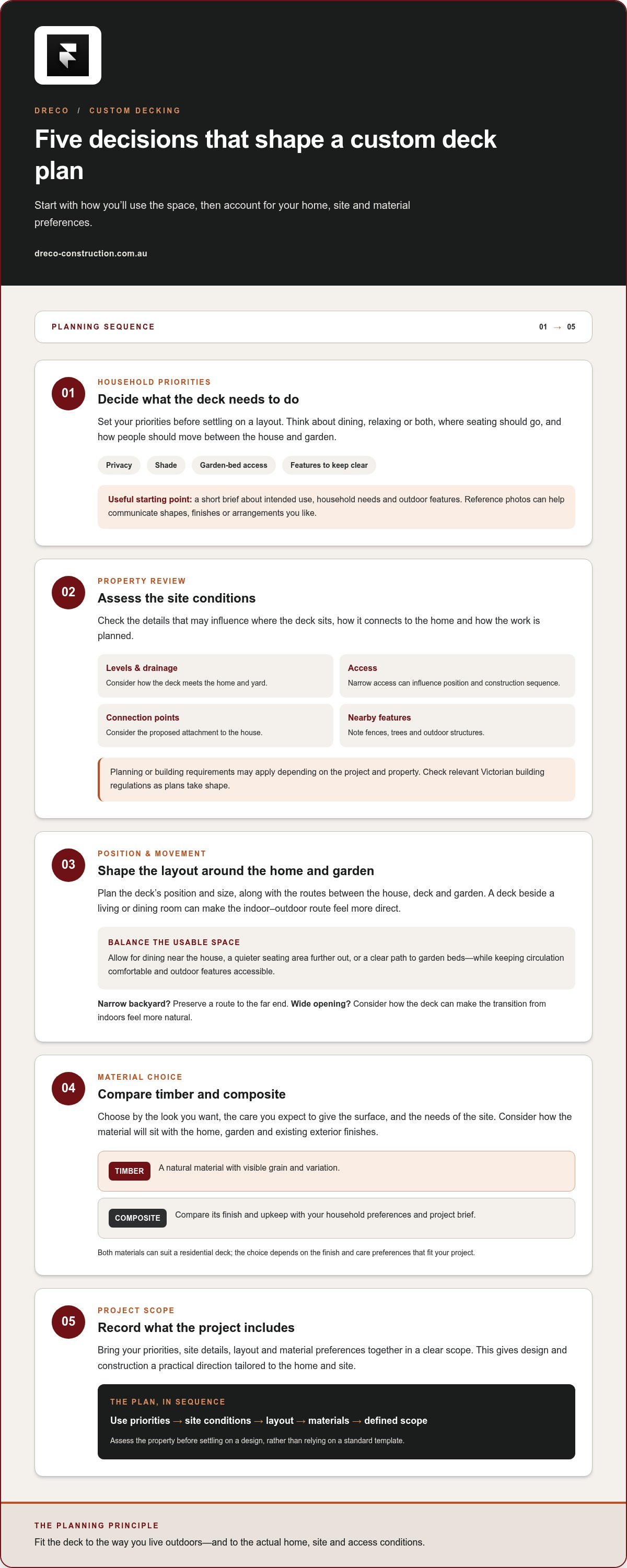
A clear plan starts with what the deck needs to do, then accounts for the conditions of the property. Use this sequence to organise your decisions:
- Set priorities: decide how you’ll use the deck and what matters most.
- Assess the site: consider levels, drainage, access, attachment points and nearby structures.
- Shape the layout: plan the position, size and routes between the house, deck and garden.
- Select materials: weigh the look and upkeep preferences that suit your brief.
- Define the scope: record what the project includes so design and construction have a clear direction.
This order connects household priorities with practical site conditions. A custom deck builder Melbourne homeowners work with should assess the property before settling on a design, rather than relying on a standard template. The scope can then respond to the home and site as they are.
What should you decide before discussing deck design?
Start with everyday details: whether you want space for dining, a place to relax or both; where you’d like seating; and how people should move between the house and garden. Note practical priorities such as privacy, shade and access to garden beds, along with existing features you want to keep clear.
Reference photos can help explain the shapes, finishes or arrangements you like without locking the project into someone else’s design. A short brief covering intended use, household needs and outdoor features gives the builder a useful starting point for discussion.
How do site conditions shape a deck layout?
Levels can affect how the deck meets the home and yard. Drainage, narrow access and nearby fences, trees or outdoor structures can also influence its position and the sequence of construction. Attachment points matter too: the proposed connection to the house needs to be considered as part of the site review. These details help determine a suitable approach before the scope is settled.
Planning or building requirements may also apply depending on the project and property. Requirements can be project-specific, so check relevant Victorian building regulations as the plans take shape. This keeps the design conversation grounded in both your household brief and the practical requirements of the work.
With your priorities and site details in hand, you’ll be better prepared to discuss a tailored deck with DreCo’s custom decking team.
Timber or composite: which decking material suits your project?
Choose a decking material by considering the look you want, how you expect to care for the surface and the needs of the site. Timber and composite can both suit a residential deck, but they create different finishes and may suit different household preferences. The right choice supports your project brief, rather than being based on appearance alone.
Before deciding, think about how the deck will connect with the home and the visual effect you want across the outdoor space. The surrounding garden, existing exterior finishes and intended use all help put the choice in context. A custom deck builder Melbourne homeowners work with can discuss how each material fits the proposed layout and your priorities.
When might timber decking suit your home?
Timber is a natural material with visible grain and variation, which can complement homes where a warm, natural finish is part of the brief. Consider how it will look alongside the house and garden, and whether you’re comfortable with the care routine timber decking requires. The choice of timber can be considered as part of the project, rather than settling on a species before the site and overall design are understood.
When might composite decking suit your priorities?
Composite is an alternative for homeowners weighing up a different surface appearance and care routine. Its look depends on the material selected, so consider whether it works with the home’s exterior and the feel you want for the deck. Discuss how composite suits the site and intended use as part of the design, rather than assuming it will suit every project.
To compare the options against your priorities, consider:
- Appearance: Do you prefer the natural variation of timber or the finish of composite?
- Upkeep: Which care routine better suits the time you want to spend maintaining the deck?
- Project fit: How does each material work with the site, layout and way you’ll use the space?
These questions turn a broad material choice into a decision grounded in the project. A deeper timber-versus-composite comparison can help you weigh the differences before settling on a direction. The final selection should make sense for the home, the site and your household’s preferences.
What happens during a custom deck build in Melbourne?
A well-organised deck project moves from an initial discussion to a finished structure through a series of considered decisions. The site, access and chosen materials all affect how the work is planned, so the sequence is shaped around the property.
How does a deck project move from brief to build?
The first discussion is a chance to explain how you want to use the deck, how it should connect with the house and whether you’re considering timber or composite. A site review helps the carpenter understand the layout, levels, access and nearby structures, bringing the brief and property into the same conversation.
From there, the design and scope can be refined to suit the site. A clear scope sets out the work involved and the decisions to settle before construction begins. Materials and access help inform the work sequence, while any project-specific approvals or requirements should be identified and verified before work starts. Timing and construction details depend on the individual project.
What should homeowners expect while work is underway?
Good communication helps households prepare for the work. Before construction, discuss access to the work area, how materials will reach the site and which parts of the yard or home may be affected. This allows household routines to be considered as the work is organised. If a site condition or decision changes the agreed scope, clear communication helps everyone understand the next step.
Residential carpentry takes place around the home, so keeping work areas orderly and treating the property with care matters. Led by a qualified carpenter, DreCo coordinates deck design and construction around the agreed scope, from planning through completion.
If you’re still shaping the idea, you don’t need every detail settled before starting a conversation. Talk through your deck plans with DreCo and discuss how the project could respond to your home and site.
Why work with DreCo for a custom deck in Melbourne?
DreCo is a Melbourne residential carpentry specialist that designs and builds custom timber and composite decks, as well as completing re-decking projects. Led by a qualified carpenter, the business brings practical carpentry knowledge to each deck’s design and construction. The conversation can focus on how the home, property layout and intended use shape the project.
For homeowners looking for a custom deck builder Melbourne, a tailored approach matters because each property has different priorities. A deck may need to sit neatly alongside the house, work around existing outdoor features or suit a particular way of using the yard. The design and scope can respond to those details rather than following a standard template.
How does DreCo tailor a deck to each home?
The starting point is understanding what you want from the space and how it relates to the property. DreCo builds custom timber and composite decks and undertakes re-decking, with the work planned around the home’s layout and the project’s intended use. Clear communication helps keep decisions and scope understandable, while careful carpentry supports a considered finish.
DreCo serves local areas associated with postcodes 3186, 3187, 3188, 3189, 3190, 3191, 3192 and 3193. If your home is in this part of Melbourne, you can start with an early idea, a developed brief or a re-decking project.
What is a useful next step for a Melbourne homeowner?
You don’t need a finished design to start a useful discussion. A few site photos, approximate dimensions and a short project brief can help explain the space and your priorities. Include how you’d like to use the deck, any material preferences and outdoor features that may affect the layout. These details give the conversation a practical starting point and help shape the project’s direction and scope.
Whether you’re still exploring possibilities or ready to discuss a defined project, Discuss your custom deck project with DreCo.
Start shaping a deck that fits your home
A well-planned deck starts with how you want to use the space, then takes account of the home, site and existing outdoor features. The choice between timber and composite depends on the look and care routine that suit your priorities. A clear project scope also helps set expectations from design through to construction.
DreCo is a Melbourne residential carpentry specialist led by a qualified carpenter, building custom timber and composite decks, re-decking and outdoor structures. If you’re looking for a custom deck builder Melbourne, bring along a few site photos and your main priorities, whether you have an early idea or a developed brief. That’s enough to begin a practical conversation about direction and scope.
Discuss your custom deck plans with DreCo, whether you’re considering a new deck or updating an existing one. A considered first conversation can help turn your outdoor-space idea into a plan that works for your home.
Frequently Asked Questions
What should I consider before hiring a custom deck builder in Melbourne?
Start by clarifying how you’ll use the deck, which materials you’re considering and which site features could affect the design. Photos, approximate dimensions and a short project brief can make the first discussion more useful. A custom deck builder Melbourne homeowners work with should review the property and explain the proposed scope clearly. DreCo is led by a qualified carpenter and builds residential timber and composite decks tailored to each project.
How is a custom deck different from a standard deck?
A custom deck is designed around the home, property layout and intended use, rather than applying a set layout to every backyard. Its position, size and shape can account for the connection to the house, garden access, levels and existing outdoor features. This helps the design respond to the site and household priorities. The project scope is then defined around that design, including material choices and the work needed to build it.
Is timber or composite decking better for a Melbourne home?
Neither material is automatically better for every home. Timber offers a natural appearance with visible variation, while composite provides a different look and care routine. Consider which finish suits the house and garden, how you plan to use the deck, and what level of upkeep feels manageable. Site conditions and the project brief matter too. Discussing these factors together helps match the material to your priorities rather than choosing by appearance alone.
How long does it take to build a custom deck?
The timeframe depends on the design, scope, material selection, site conditions and access. A straightforward site and a more involved layout can require different work sequences, while project-specific approvals may also affect when construction can begin. DreCo considers these factors as the project is planned, rather than applying a fixed timeframe to every deck. Discuss the proposed scope and sequence so expectations are based on the details of your property and project.
Do I need council approval for a deck in Melbourne?
Building permit requirements depend on the deck and property. In Victoria, a deck attached to a house requires a building permit regardless of size. A permit is also required for a freestanding deck larger than 10 square metres or more than 800mm above ground. Other requirements may apply, including for decks close to a boundary. Check the project with the relevant council or building surveyor before work begins, as requirements depend on the circumstances.
Can an existing deck be re-decked instead of replaced?
Yes, re-decking can be an option for an existing deck, and DreCo completes residential re-decking projects. The right scope depends on the condition of the existing structure and what the project needs to address. A site review helps establish whether the work is focused on renewing the deck surface or needs a broader approach. Share any concerns about the existing deck and how you’d like the updated space to work.
Does DreCo build custom decks in Melbourne’s Bayside area?
DreCo serves local areas associated with postcodes 3186, 3187, 3188, 3189, 3190, 3191, 3192 and 3193, which include Bayside and nearby Melbourne localities. The service area is tied to those postcodes, rather than all Melbourne suburbs. If you’re in the area and planning a timber or composite deck, a few site photos and a short outline of your plans can help start a practical discussion about the home, intended use and project scope.


